
How Japan's Self‑Service Vegetable Stands Reflect Rural Trust
Trust without Institutions

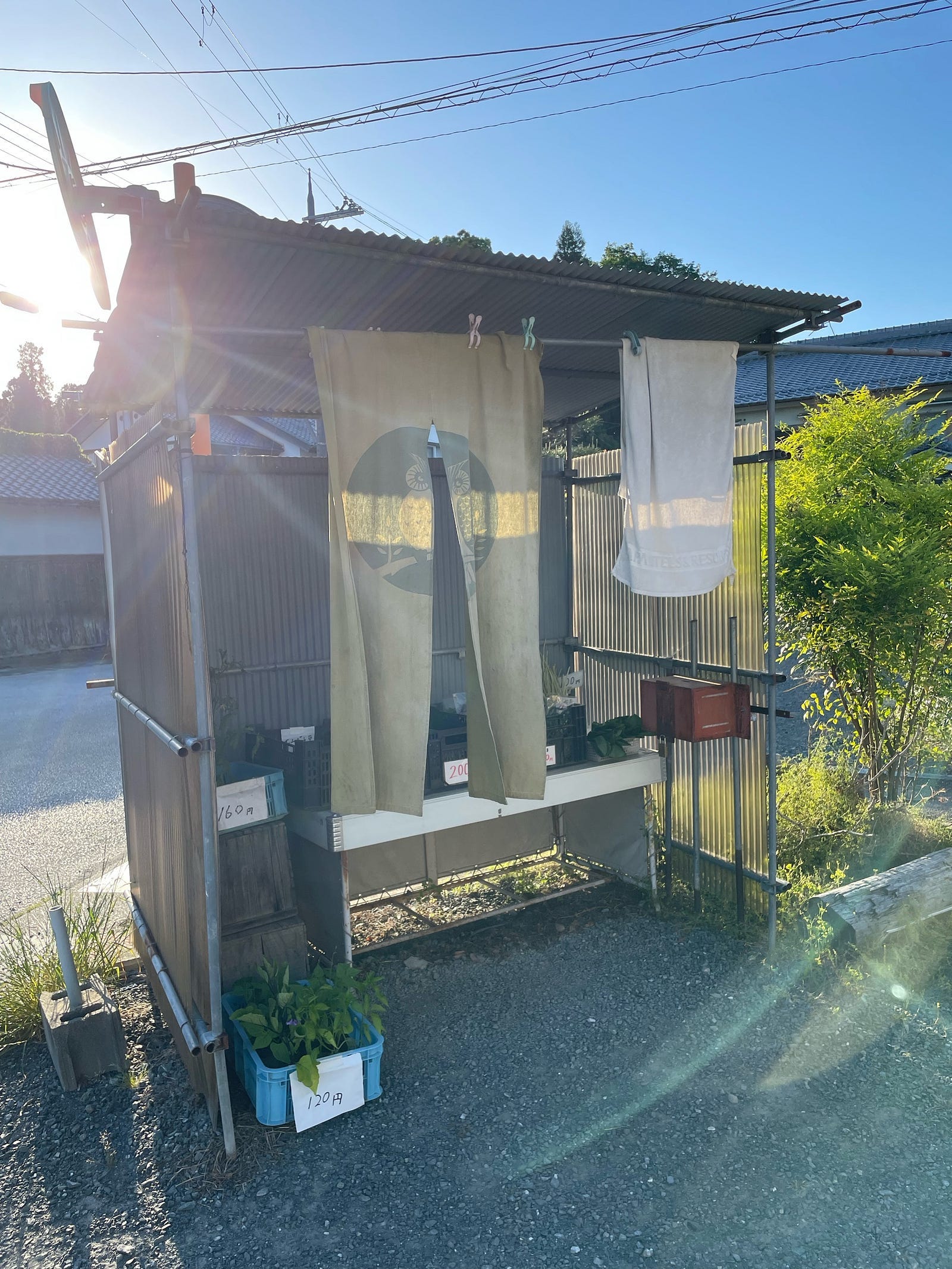
Last weekend, I walked with my daughter along the rural periphery of Kameoka, a small city near Kyoto, notably known for its Sanga Stadium, home of Kyoto Sanga, a J1 League soccer club. (If you want to know more about this club, well, I am not the right person!)
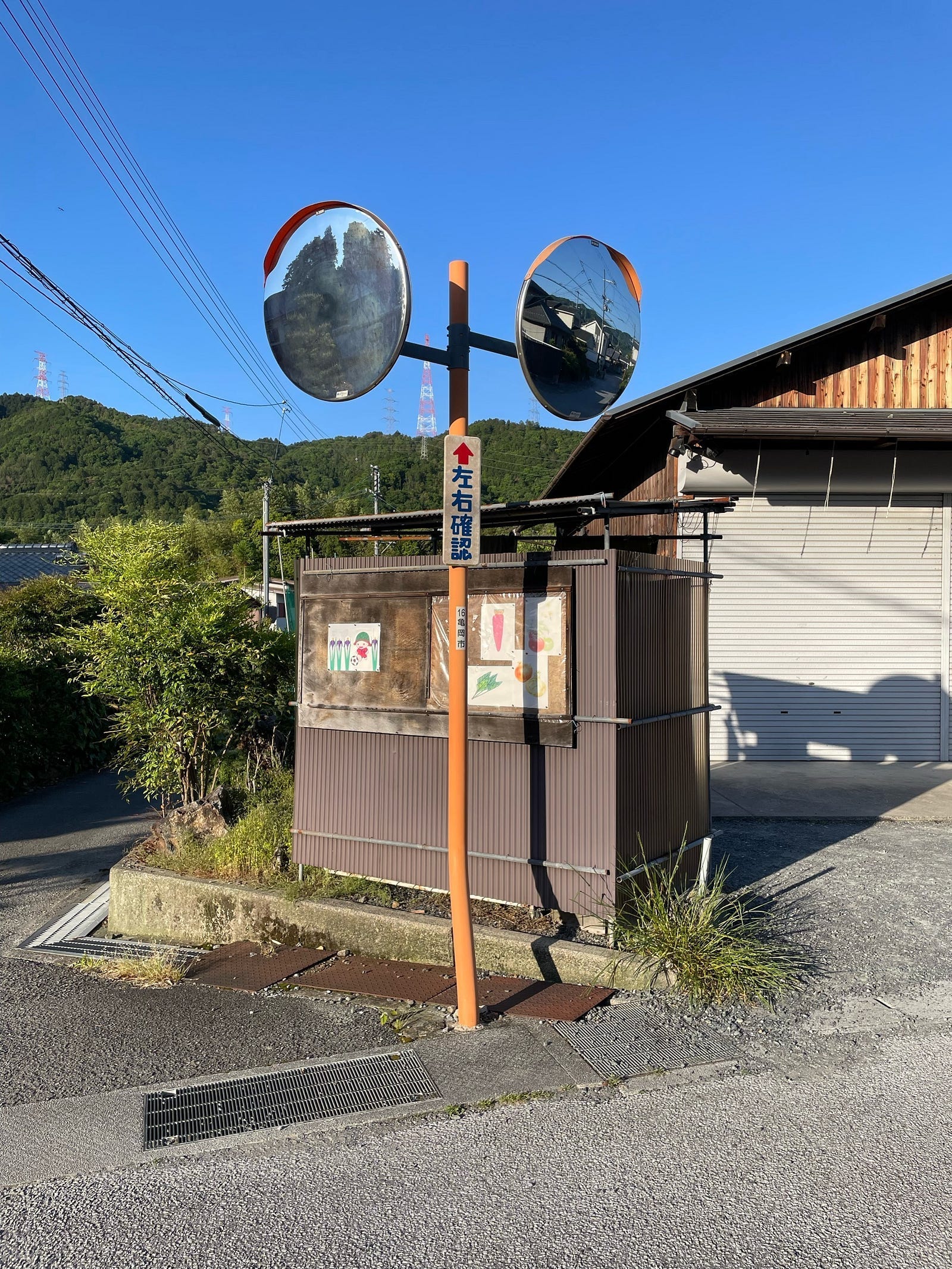
The area is typical of Japan’s countryside: a mix of farmland and forest, aging infrastructure, and relatively few residents. What stood out was not the landscape, but the way people conduct little business there.
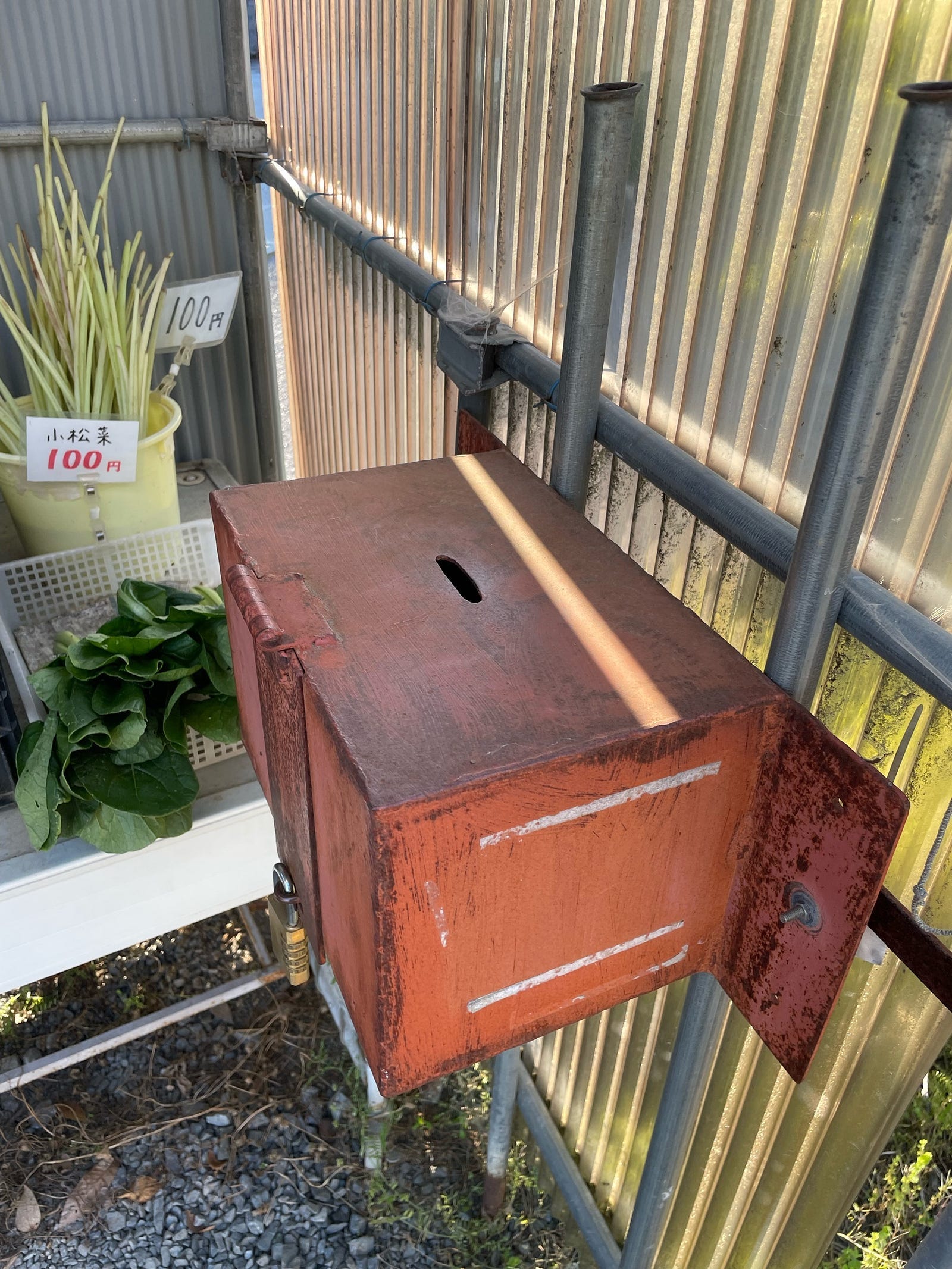
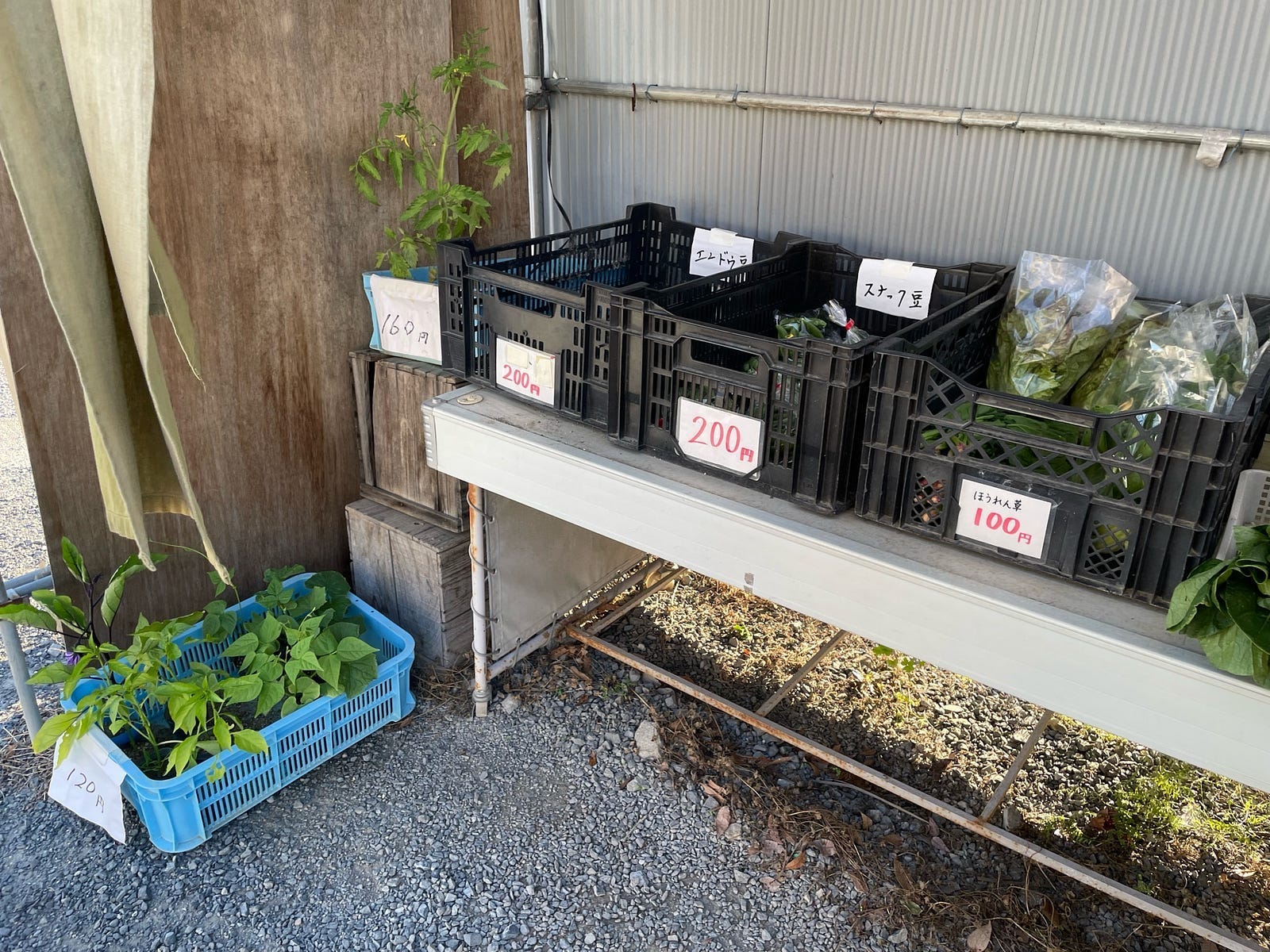
Along the narrow roads, frequented by only a few individuals every day, there is a small roadside stand, made of wood and metal. It was filled with vegetables. Nothing fancy, it is not yet the season for summer vegetables, but it was there. The only instructions were handwritten signs with prices and a small box for coins.
These are called mujin hanbaijo 無人販売所 in Japanese: “unmanned sales” stands, often referred to in English as self‑service. The model is simple. Farmers, usually smallholders, harvest their produce and bring surplus to these roadside stands. The vegetables are priced low — often 100–300 yen per item — below supermarket levels. Customers pick what they want, count the cash, and drop it into the box.
In many ways, the system works because it doesn’t look like much of a system at all. There are no cameras, no receipts, and nobody. The only mechanisms are social: local demand, word of mouth, and the expectation that most people will pay. If someone does take produce without paying, the loss is usually small and inconsequential. Repeated theft would be noticed in a small community, where people see each other regularly.
Why this model fits rural Japan
The self-service stand aligns with key features of rural Japanese life.
First, small farms often produce more than they can sell through wholesalers or supermarkets. Grade‑A produce goes to distribution channels; irregular or surplus items end up at these stands, cutting waste and giving farmers a small extra income.
Second, operating costs are minimal. The stand itself is often homemade. There is no need for a shop, minimum wage labor, or branding. For an aging farming population, this is a practical way to keep working without the overhead of running a store.
Third, the model depends on cohesion and repetition. In cities, anonymous transactions dominate, and trust is technologically enforced — credit cards, barcode payments, and so on. In Kameoka‑style areas, interactions are more personal and iterative. Regular customers know roughly which farmers supply which places. Disputes or theft are handled through simple, informal pressure.
An alternative to urban transaction norms
At a broader level, these standpoints point to a different transaction culture. Urban retail in Japan is highly formalized, with strict rules and standardized pricing. In rural areas, the same market forces operate, but the enforcement is more diffuse and social. Trust is not outsourced to systems. It is distributed across neighbors.
That doesn’t mean the system is perfect. Prices can be inconsistent, stocks run out suddenly, and some stands disappear when farmers retire or move away. But the persistence of this model suggests it still meets a real need: low‑cost, convenient access to local produce, and a way for small farmers to remain economically active without heavy infrastructure.
Seeing these stands in Kameoka is a reminder that trust is not only visible in formal institutions — banks, courts, corporations — but also in small, mundane practices. A roadside vegetable box suggests an informal agreement that most people will follow the rules without being watched.
In that sense, the self‑service vegetable stand is more than a bargain. It is a low‑tech experiment in trust, repeated every day along Japan’s rural roads. It shows that, even in a country often associated with hierarchy and formality, there is still room for informal, community‑based arrangements — to the extent that someone can leave their vegetables by the side of the road and expect them to pay for themselves.
Conclusion
In the end, these small stands reveal not just a simple rural custom, but also a social logic. They illustrate that trust can flourish outside of formal systems because the community continues to perform tasks that institutions elsewhere must formalize. In that sense, the mujin hanbaijo is not a relic. It is an expression of civic health, an arrangement through which everyday honesty remains economically useful.
This may also explain why these stands feel more significant than they appear. They are not just about cheap produce or convenience, but also about a shared understanding that public life depends, at least in part, on people acting properly when no one is watching. Along the roads of rural Japan, this principle is not theoretically announced or technologically enforced; it is simply practiced one coin box at a time.
This publication would not be possible without the invaluable support of our readers. Please consider supporting us with a paid or founding subscription.